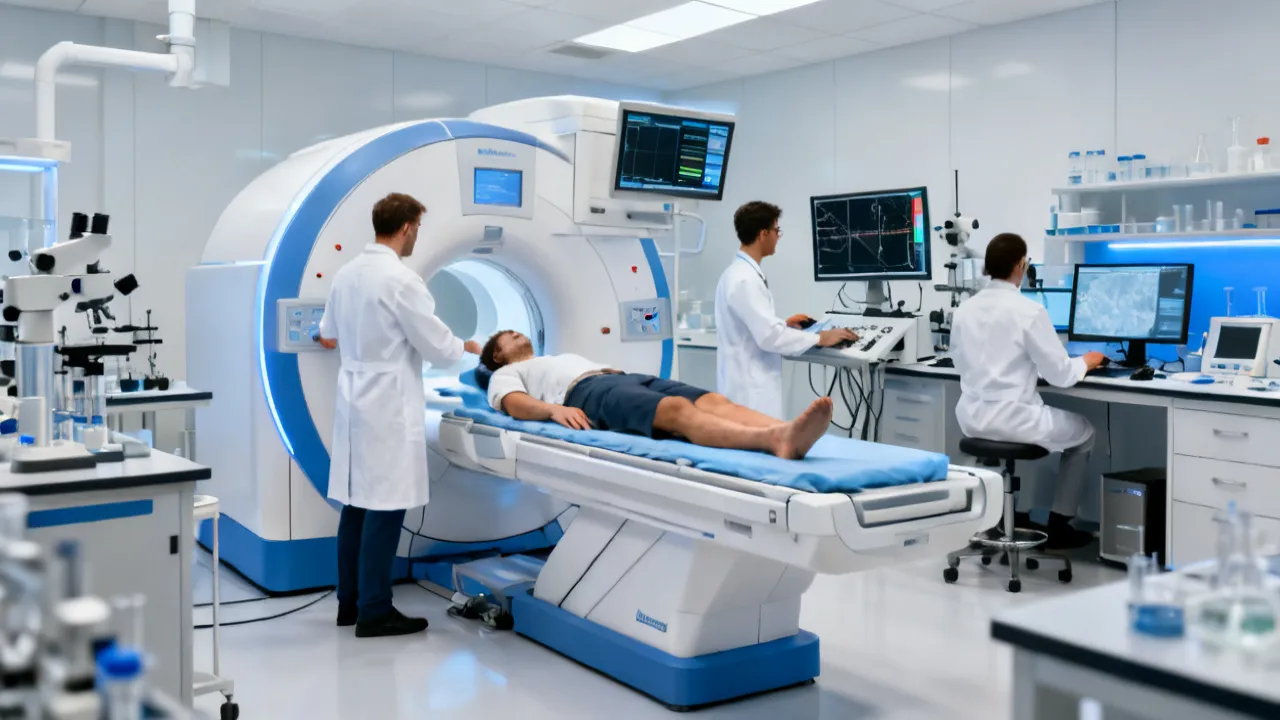

Insights into the Oncemrk Trial
The Oncemrk Trial showcases significant advancements in clinical research. Known for its rigor and innovative protocols, this trial aims to explore unexplored facets of modern medicine. This objective analysis highlights its importance in the competitive landscape, alongside insights into its methodologies and potential impacts on future medical treatments.

Overview of the Oncemrk Trial
With an evolving landscape of clinical research, the Oncemrk Trial stands as a testament to innovation and rigor. It encompasses a meticulous framework of methodologies and scientific exploration to push the boundaries of current medical understanding. This article delves into the essence of the trial, illuminating its core principles, objectives, and potential impact on the healthcare industry. The Oncemrk Trial is designed to provide novel insights into treatment modalities for conditions that have long challenged healthcare professionals, thereby reshaping the way we understand and manage diseases.
The Significance of Clinical Trials
Clinical trials form the backbone of medical advancements, providing essential data to validate hypotheses and ensure the safety and efficacy of new treatments. The Oncemrk Trial exemplifies this through structured research and strict adherence to regulatory requirements. By honing in on particular health challenges, it seeks to not only verify the effectiveness of new drugs but also uncover novel therapeutic interventions. These trials play a vital role in bridging the gap between laboratory discoveries and real-world applications, ensuring that innovative treatments translate into tangible health benefits for patients. Moreover, the Oncemrk Trial serves as a model for transparency, ethics, and comprehensive participant engagement, all of which are fundamental to the integrity of the clinical research process.
Understanding the Oncemrk Trial's Structure
Every leading clinical trial boasts a robust structure, and the Oncemrk Trial is no exception. It's organized into phases that methodically assess various aspects of the treatment being studied. This approach minimizes risks and maximizes the reliability of results. Let's explore the key phases of this trial:
- Phase 1: This phase primarily examines safety and dosage parameters. It establishes foundational data that identifies appropriate treatment levels while closely monitoring how the body responds to the drug. During this phase, a small group of healthy volunteers or patients is typically used to ensure that preliminary safety data can be gathered swiftly.
- Phase 2: Here, the participant pool expands to evaluate efficacy while continuing to monitor for side effects. The aim is to gain a better understanding of how well the treatment works and at what dosages it is most effective. This phase often involves comparison against a placebo or different therapeutic regimens to assess relative effectiveness.
- Phase 3: At this stage, the trial involves a larger population across multiple locations, often comparing the new intervention against standard treatments. This phase is critical as it provides the larger data set necessary for determining the drug's benefits and risks in a more diverse population.
- Phase 4: This post-market phase occurs after the treatment is made available to the public. It involves gathering additional information about risks, benefits, and optimal use conditions in a broader and more varied patient population. This feedback loop informs future improvements and additional indications for the drug.
Potential Impacts on the Medical Field
The Oncemrk Trial holds the promise of altering the landscape of medical therapeutics with its innovative approaches. By addressing unmet medical needs and refining patient care strategies, it can lead to substantial improvements in treatment outcomes. Furthermore, insights gleaned from this trial could pave the way for developing advanced biomolecules and personalized medicine strategies. These advancements may shift therapeutic practices toward more individualized treatment plans that consider a patient's unique genetic makeup, lifestyle, and preferences.
Moreover, the results of the Oncemrk Trial may influence healthcare policies and guidelines by providing evidence-based recommendations that enhance patient care standards. The trial has the potential not only to introduce new drugs but also to create a ripple effect, fostering advancements in medical technologies, diagnostic tools, and treatment methodologies that can benefit future generations of patients.
Comparison of Innovative Protocols
| Aspect | Oncemrk Trial | Traditional Trials |
|---|---|---|
| Design | Adaptive, based on real-time data | Static, fixed protocol from start |
| Sample Size | Flexible, adjusted based on interim results | Pre-determined, fixed throughout |
| Duration | Potentially shorter due to adaptive nature | Often longer, due to fixed design |
| Patient Engagement | High, with continuous feedback loops | Lower, with less interaction |
| Data Collection | Real-time and dynamic | Periodic and static |
FAQs
- What is the primary goal of the Oncemrk Trial? The essential aim is to evaluate new medical interventions' safety, efficacy, and optimal use cases. This encompasses understanding the pharmacokinetics and pharmacodynamics of the intervention as well as its effects on various patient subpopulations.
- How does it differ from other trials? Its adaptive design allows for real-time adjustments based on emerging data, optimizing both safety and efficacy. This may include altering dosages or redirecting participant allocations to focus on subgroups that demonstrate the most promise, which is a stark contrast to traditional trials that follow a predetermined pathway regardless of interim findings.
- Who can participate in the Oncemrk Trial? Participants are selected based on specific criteria, including health status and demographic factors. Comprehensive screening processes ensure that the diversity of participants reflects the broader population, enhancing the generalizability of the study findings.
- What regulatory standards does it follow? It adheres to local and international regulations ensuring high ethical standards and participant safety. These include compliance with the Declaration of Helsinki, Good Clinical Practice (GCP) guidelines, and oversight by institutional review boards (IRBs) or ethics committees to safeguard participant rights and well-being.
Challenges Encountered in Clinical Trials
Despite the promise that trials like Oncemrk hold, many challenges must be navigated throughout the research process. Recruitment and retention of participants are often cited as significant hurdles. Engaging patients in clinical trials requires clear communication of potential benefits and risks, and overcoming hesitations regarding participation in experimental therapies can be daunting. Many individuals may not meet the strict eligibility criteria, while others may drop out due to personal reasons or adverse effects experienced during the trial.
Moreover, ensuring a diverse and representative sample of the population can be elusive. Historical disparities in clinical research participation among different racial, ethnic, and socioeconomic groups can affect the comprehensiveness of trial results. The Oncemrk Trial addresses such issues by employing targeted outreach strategies, building trust within communities, and providing resources that facilitate participation.
Another challenge faced by clinical trials, including the Oncemrk Trial, is the evolving nature of medical and technological advancements. As new scientific knowledge emerges, it can shift clinical priorities and expectations. Updating protocols to incorporate the latest research findings while maintaining compliance with regulatory standards demands flexibility and careful planning, an area where the adaptive design of the Oncemrk Trial excels.
Engagement with Patients and Communities
Ensuring active participation by patients and communities is paramount to the success of modern clinical trials. The Oncemrk Trial adopts a patient-centered approach that emphasizes transparency, communication, and education. This approach is critical in building a rapport between researchers and participants and in demystifying the clinical trial process.
Patient advisory boards are employed to gather feedback regarding trial design, operational elements, and patient concerns. These boards help tailor the trial to be more relevant and accessible to potential participants. Regular community engagement events, informational webinars, and outreach initiatives are conducted to raise awareness about the trial, its objectives, and the potential benefits of participation. By involving patients at every stage of the research process, the Oncemrk Trial works to foster a sense of ownership and collaboration that is integral to advancing clinical research.
Future Directions in Clinical Research
The landscape of clinical research is experiencing rapid transformations, driven by innovations in technology, data analysis, and a more profound comprehension of complex diseases. Future directions, as epitomized by the Oncemrk Trial, are likely to emphasize personalized medicine, utilizing genetic information to tailor interventions to individual patient profiles. This could lead to the development of therapies that not only target specific pathological mechanisms but also predict patient responsiveness, thereby optimizing treatment outcomes.
Digital health technologies will also play an increasingly crucial role in future clinical trials. Tools like wearable devices, mobile health applications, and telehealth platforms can collect real-time data on patient health status and treatment adherence, enhancing the precision and timeliness of observations. Through innovative data collection methodologies, researchers can capture a broader spectrum of patient experiences and outcomes, augmenting traditional trial paradigms. This digital integration can also facilitate remote participation in trials, making it easier for patients from diverse geographical and socioeconomic backgrounds to engage in research.
Furthermore, interdisciplinary collaborations will continue to be a driving force in clinical research. Engaging experts from various fields such as behavioral sciences, psychology, data science, and engineering fosters a holistic approach to research that can yield groundbreaking insights. The Oncemrk Trial sets a precedent for such collaborative efforts, bringing together diverse stakeholders to address complex health problems comprehensively.
Conclusion
In an ever-evolving medical landscape, the Oncemrk Trial exemplifies innovative clinical research. Its success hinges on the seamless integration of rigorous scientific methodology with adaptive protocols. As the trial progresses, it draws us closer to breakthroughs that promise to redefine treatment paradigms, offering hope to millions worldwide. Whether it leads to immediate new solutions or lays the groundwork for future studies, its influence on the realm of clinical research is undeniable.
As we look to the future, the lessons learned from the Oncemrk Trial can serve as a guide for enhancing clinical trial designs and patient engagement strategies. By embracing adaptability, fostering inclusivity, and leveraging cutting-edge technologies, clinical trials can not only enhance their effectiveness but also transform the way we approach health and medicine on a global scale.
In sum, the Oncemrk Trial is not merely a study—it's a beacon of progress that encapsulates the hopes of countless individuals seeking effective treatment options. By pushing the boundaries of conventional research, it holds the potential to revolutionize patient care, setting new standards for the medical community and ultimately improving the lives of those affected by disease.